

Midlands Arts Centre is the ideal home for an enthralling new exhibition, Emmy Bridgwater and Birmingham Surrealists, which puts a spotlight on the long-overlooked artist and poet, as well as her contemporaries.
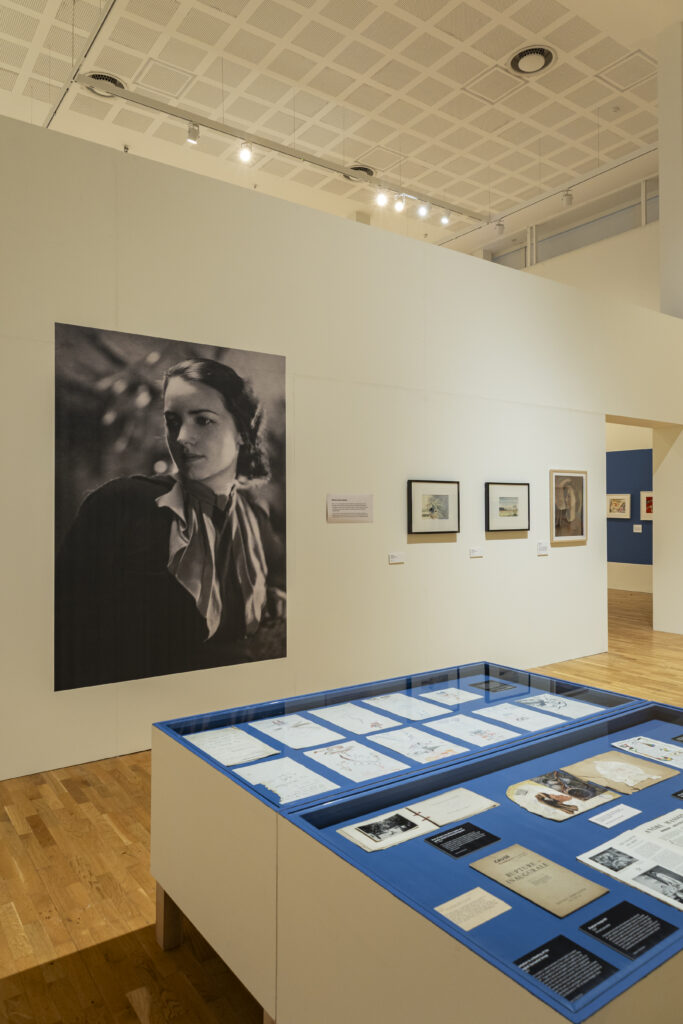
While British Surrealism is most associated with London, Birmingham was also an epicentre for some of the movement’s most radical creativity, as this richly curated show of artworks, and associated ephemera, proves.
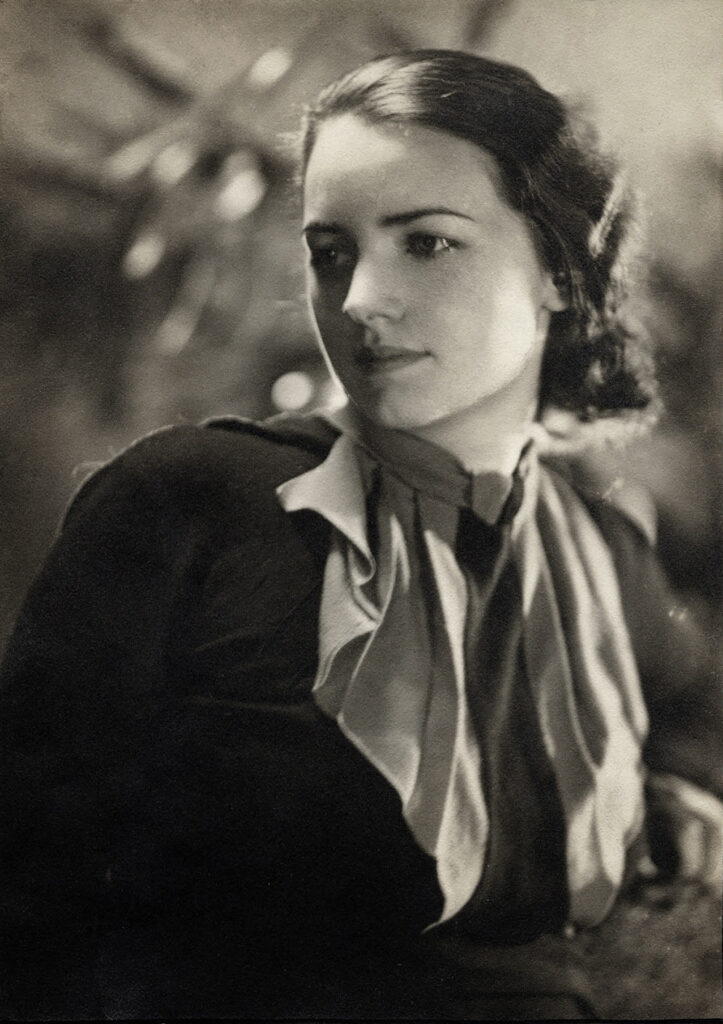
It opens by positioning Bridgwater (1906 – 1999) as a key, and only female, member of the Birmingham Surrealist group alongside Conroy Maddox, John and Robert Melville, Oscar Mellor and Desmond Morris.
From the 1930s to 1950s, they transformed everyday experiences into visions of the uncanny through paintings, drawings, readymade objects and collages – in the first gallery an inventive selection sets the collective scene.
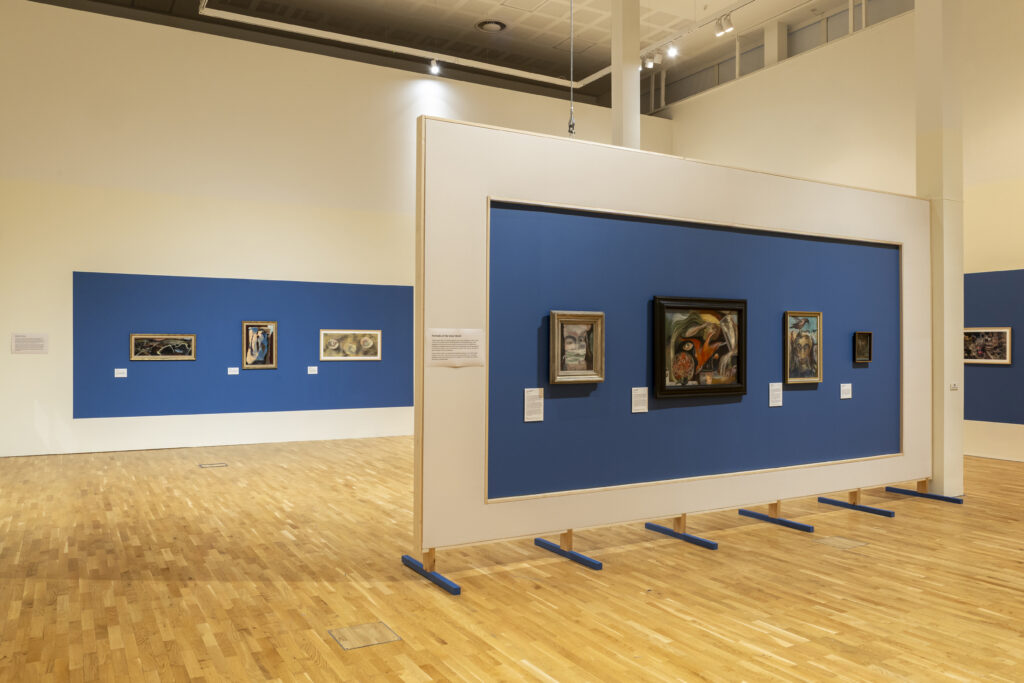
But the star of this show is Bridgwater, and among her standout paintings is ‘Brave Morning’, 1943, in which a young woman pulls back the curtains to reveal a surprising new day. Above a series of still life objects, one wide-open eye, and the artist’s late father, who wears a theatrical black top hat, hovers an exotic-looking red bird, its wings outstretched.
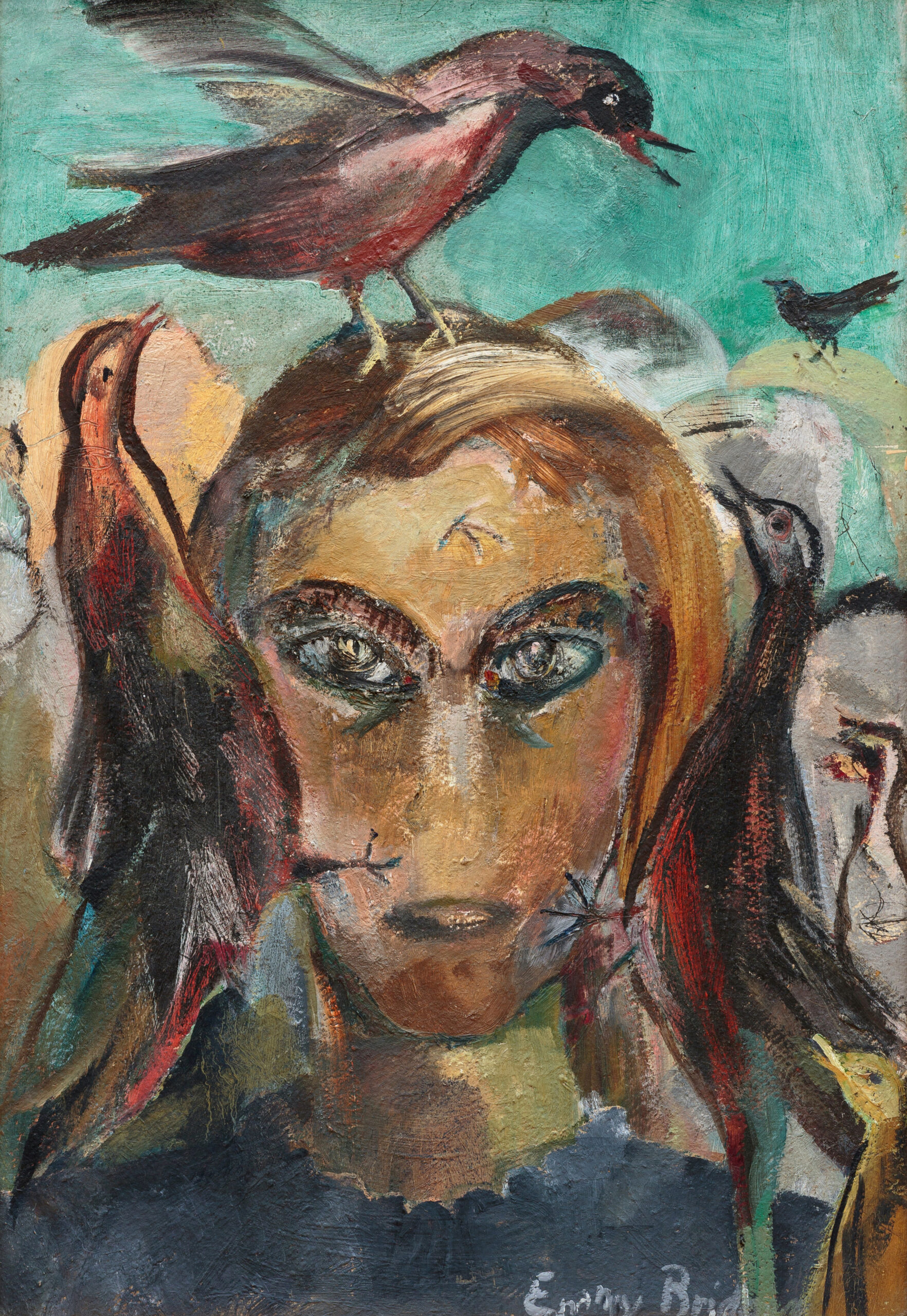
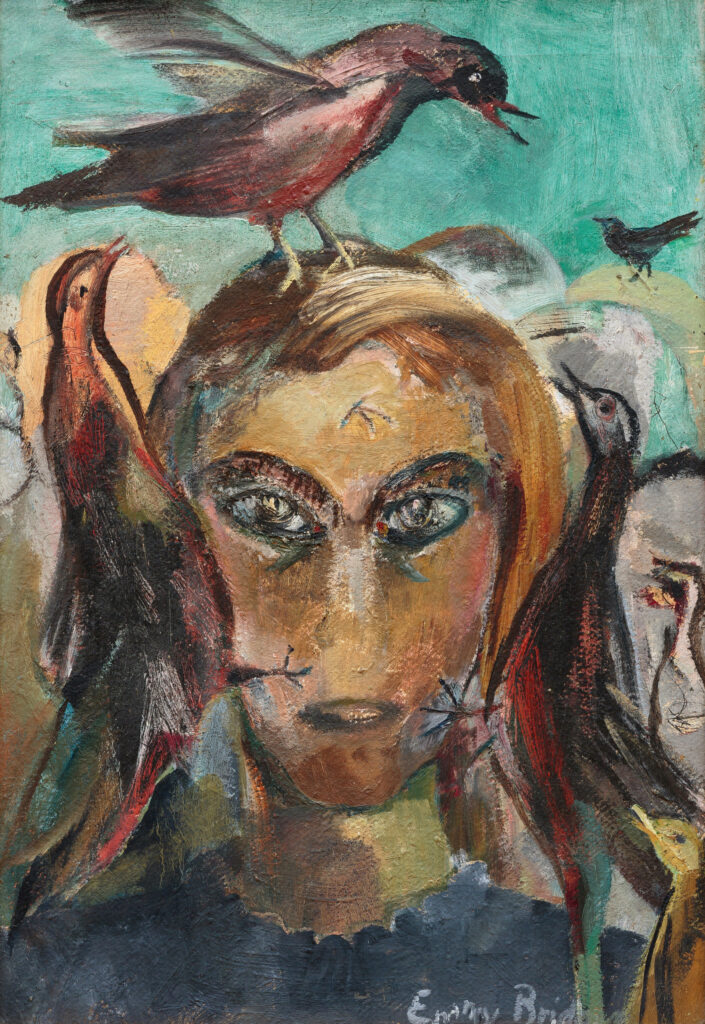
Birds are a recurring motif in Bridgwater’s work, including ‘Footprints’, c.1945, in which six crows surround and even perch on the head of a wary-looking woman. Are they real or figments of her imagination? Through ambiguous and often unsettling symbolism, which surrounds a cast of mostly female characters, the artist explores themes of identity, gender, life and loss, while leaving room for the viewer’s own interpretation.
Birds are also a sweeping presence in her ink drawings, which are another highlight. From fluid black lines emerge hybrid creatures, female faces and evocative narrative scenes. The flowing hair of a woman in profile doubles as the waves beneath a small boat, being rowed by a tiny figure, in ‘Dream Boat’.
By experimenting with the technique of automatic drawing – created by chance and without logic – the artist sought to directly access and express her subconscious mind. Impressed by her approach, Surrealism’s founder André Breton wrote: “Bridgwater brought a new purity of outlook to British Surrealism, returning to the early days of the movement, to its ‘automatic’ beginnings in France”.
The same introspective quality defines many of her paintings, including a series of dreamlike landscapes from the 1940s. Often pictured through doorways or portals, swirling forms, celestial orbs and soft shapes assume a magical quality, imagined in a moody palette of dusty pinks and mauve purples, midnight blue and rusted orange.
An atmosphere of unrest and transformation is found, too, in her poetry, of which there are extracts printed onto the walls, inviting viewers further into her subversive world.
During the 1950s, Bridgwater became more preoccupied by the possibilities of abstraction, like many of her fellow Surrealists. However, paintings such as ‘Sudden Glimpses’, late 1950s/early 1960s, echo with her earlier imagery of organic forms, continuing to evoke landscapes of the inner mind.
Then, in the 1970s, she experimented more extensively with collage to create bold compositions such as ‘Encounter’, c.1970s, in which a small moon illuminates a scene of unusual meeting points between Birmingham’s canals and ancient artefacts, a deer and a basket of eggs.
In several other collages on show, she has cut and pasted images of femininity, from elegantly dressed women to roving hands, in her unique, and, often, darkly humorous manner.
These witty collages are presented in dialogue with a ceramic installation by contemporary female artist, Paloma Proudfoot, ‘Ventriloquy’, 2024. Having shrunk a male figure to the floor below two giant female legs, this intervention enforces the message of this show, that Bridgwater should be brought out of the shadow of her male counterparts.
Also on display are a series of new and haunting paintings by fellow Brummie, Laura Footes, who has taken direct inspiration from Bridgwater for this occasion. Across five canvases appear the city’s landmarks, from Town Hall to Chamberlain Clock, beside which stand female body parts, fragmented, ghostly and isolated, all cloaked in a dreamlike palette of twilight blue.
On the metaphysical streets of the Second City, Footes has excavated Birmingham’s surreal past while pointing to its present; Bridgwater continues to inspire contemporary artists today.
A major homecoming for Bridgwater, this exhibition crucially positions her among the most pioneering Birmingham and British Surrealists, and several glass cabinets hold handmade cards, letters and invitations sent between collaborative members of the 20th century movement, proving her central place in that story.
Yet, she has long been neglected by traditional narratives, as both a Midlands-based and female artist, who had to assume caring responsibilities in the latter stages of her career. But without over-emphasising her biography, this show successfully celebrates her distinctive vision, deep imagination, and her enduring influence today.
Free to visit, the exhibition runs until Sun 10 Jan 2027 at MAC